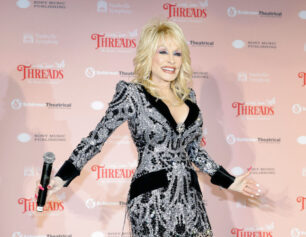

Dolly Parton’s rise from a poor childhood in rural Tennessee to international stardom is one of music’s best-known success stories. But as her career generated money, Parton made it a priority to use her success to help the parents who had raised her and her 11 siblings with very little.

Taking Care of Mom and Dad
Parton, who died on Aug. 25 at the age of 80 following a brief battle with cancer, had a net worth of $450 million.
Parton grew up in Locust Ridge, Tennessee, in a small cabin without electricity or running water. Her father, Robert Lee Parton, worked in the fields and had limited formal education, while her mother, Avie Lee, helped care for their large family and filled their home with Appalachian music, People reported.
As Parton’s songwriting and performing career began taking off, she helped her family financially.
While the story that she used her first paycheck to buy her parents a home has resurfaced on social media, the story isn’t actually correct. There is no confirmation she used her first check to do this, she had spoken of using her newfound fame and fortune to help her parents in various ways financially.
Parton has said her first songwriting royalty check from BMI was only about $1.50. Her ability to provide substantial financial support for her parents came later, as her career and income grew.
She bought her father a large blue truck, a gift he reportedly treasured and refused to trade in. She also bought her mother a Cadillac, People reported.
“It was always my wish to do something great for my family,” Parton said in a 2015 interview with Billboard. “I loved my daddy and my mama. My daddy always drove a truck. I bought my daddy a big blue truck, and he was always so proud of that,” recalls Parton. “He never would trade it in. He kept it. The truck is still very much in the family today. Daddy’s gone now, but I still have the truck. It’s on some of the property that I bought that Daddy used to own.”
The Cadillac eventually returned to Parton after her mother died. She said she kept the vehicle because of its sentimental value, even calling it the “Dolly-Mama.”