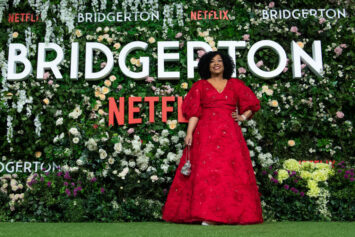

Shonda Rhimes commands a fortune estimated at $240 million and has generated billions for television networks, yet she remains the person scrutinizing sales and clipping coupons at the grocery store.

Clipping Those Coupons
The entertainment powerhouse behind “Grey’s Anatomy,” “Scandal,” and “Bridgerton” embodies a paradox increasingly common among the ultra-wealthy: astronomical success paired with steadfast frugality. While her bank account has swelled to enviable heights, her spending philosophy hasn’t budged from her pre-fame days.
The Shondaland founder’s approach to money defies Hollywood convention.
Despite her massive earnings, including a Netflix deal reported between $100 million and $300 million, according to Fortune, Rhimes maintains habits that would feel at home in any middle-class household. She’s not alone in this mindset.
Fellow entertainment figure Keke Palmer, who became a millionaire at 12, lives dramatically below her means, insisting her rent stays around $1,500 regardless of how many zeros appear in her bank account. Palmer drives a Lexus instead of a Bentley and didn’t take a vacation for the first 15 years of her career, crediting her parents for instilling principles of saving and financial responsibility.
“You know what happens when all your dreams come true? Absolutely nothing. Everything stays the same. You’re still you,” Rhimes recently shared on the “Call Her Daddy” podcast. “I’m still the person clipping coupons, and thinking ‘Maybe I should get that on sale,’ and, ‘Maybe I shouldn’t get too comfortable like with these shows.'”
Her observation cuts through the mythology of wealth transformation, acknowledging that professional milestones might change the trappings of life without fundamentally altering who someone is at their core.
Warren Buffett, the 95-year-old Berkshire Hathaway mogul worth $149 billion, takes this philosophy even further.
The world’s 11th richest person still lives in the same Omaha home he purchased for $31,500 in 1958 and once drove a 20-year-old car because he felt safer than piloting flashy luxury vehicles. His McDonald’s habit became legendary when he took Bill Gates to the chain’s Hong Kong location and pulled out coupons to pay for their meal, choosing items under $4. Gates recalled laughing at the gesture, but for Buffett, every penny genuinely counts.
“I do not think that standard of living equates with cost of living beyond a certain point,” Buffett explained at a 2014 Berkshire Hathaway shareholders meeting. “My life would not be happier … it’d be worse if I had six or eight houses or a whole bunch of different things I could have. It just doesn’t correlate.”
Yet Rhimes hasn’t exactly lived like a monk.
Her real estate portfolio tells a different story about calculated investments and strategic wealth building. Her most recent acquisition, a Connecticut compound in Westport, cost $15.17 million. The 38,000-square-foot New England Colonial masterpiece sprawls across 7.5 acres and includes 11 bedrooms, a movie theater, two-lane bowling alley, full-size indoor basketball court, and yes, an ice cream parlor. The estate features a football-field-sized lawn, swimming pool with waterslide, tennis court, and multiple guesthouses.
The purchase represents the latest chapter in Rhimes’ bicoastal real estate strategy.
She maintains a Park Avenue penthouse in New York City, purchased in 2018 for $11.75 million, a design by Michael S. Smith with elements reminiscent of Bridgerton’s aesthetic. Over the years, she’s bought and sold multiple properties in Los Angeles’ Hancock Park neighborhood, flipping one mansion for $21 million after purchasing it for $8.8 million, demonstrating savvy investment acumen alongside her creative talents.
These choices illuminate an important distinction: Rhimes isn’t cheap, she’s strategic. Her Connecticut estate and Manhattan penthouse suggest someone who invests in quality of life and long-term value rather than fleeting status symbols. She spends on assets that appreciate and experiences that matter, like creating magical spaces for her three daughters, while remaining grounded enough to hunt for grocery bargains.
Some might see that as a contradiction, but it seems Rhimes considers it financial wisdom.