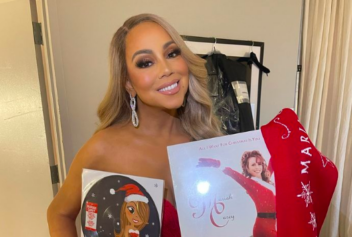

Mariah Carey has come out on top once again, this time in court. The pop diva has been awarded $92,303 after a judge dismissed a copyright infringement lawsuit filed against her over her perennial holiday hit, “All I Want For Christmas Is You.”

The suit, filed by country musician Andy Stone, who performs under the stage name Vince Vance, claimed that Carey’s 1994 classic copied his 1989 song of the same name. Stone wanted $20 million in damages, arguing that Carey had exploited the popularity and style of his original track. His legal team insisted that roughly half of the lyrics appeared in the same order, calling it a “strong claim.”
Christmas Present
In March 2025, U.S. District Court for the Central District of California Judge Mónica Ramírez Almadani ruled that Stone’s team had failed to show the songs were “substantially similar.” Expert testimony highlighted that the overlapping elements were common “Christmas song clichés” rather than unique protectable content.
Newly released court documents show the judge imposed $92,303 in sanctions on Stone’s attorneys, emphasizing that the suit “lacked merit” and warning that frivolous claims would not be tolerated. The sanctions are meant to deter similar lawsuits in the future, sending a message that baseless copyright claims would face consequences, The Independent reported.
Carey, whose holiday anthem has become a Christmas season mainstay, continues to dominate charts and airwaves. Although Wham!’s “Last Christmas” briefly overtook her song for the U.S. Christmas No. 1 this year, Carey’s track remains the most-streamed holiday song of all time, generating millions in royalties annually. Forbes estimates she earns between $2.5 million and $3 million each year from the song alone, while her co-writer Walter Afanasieff also benefits significantly.
Stone’s song, released with his band Vince Vance & The Valiants, had modest chart success in the early 1990s, but the court determined that the similarities with Carey’s global hit were superficial. The ruling reinforces the idea that titles and common holiday themes cannot be monopolized in copyright law.