

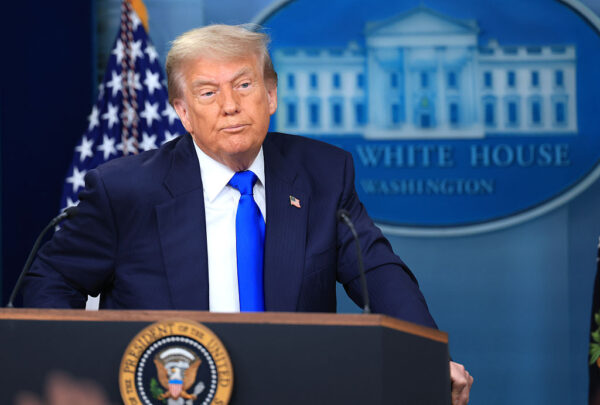
During his State of the Union address, President Donald Trump unveiled what he called “tax-free investment accounts for every American child,” branding them as a cornerstone of his latest economic push.
Read The Fine Print
The Trump accounts, set to launch July 4, promise a $1,000 federal seed deposit for eligible children born between 2025 and 2028. With “modest additional contributions,” Trump said, balances could climb to $100,000 or more by age 18, CNBC reported.
But financial experts say the accounts aren’t exactly tax-free.
Trump accounts function much like traditional individual retirement accounts, with a few key differences. Contributions can come from multiple sources — including the federal government, employers, philanthropists and families — and the money grows tax-deferred. That means families won’t owe taxes on investment gains each year. However, taxes typically apply when funds are withdrawn, CNBC reported.
“There’s not really any sense in which Trump accounts are tax-free,” Ben Henry-Moreland, a senior financial planning expert at Kitces.com, told CNBC. “People pay tax on the dollars that they contribute to the account, and they pay tax on any additional growth when they withdraw from the account.”
The Treasury’s $1,000 seed money and other pretax contributions, such as company matches or salary deferrals, would be taxed as ordinary income upon withdrawal. Meanwhile, after-tax contributions from parents or guardians create what’s known as “basis,” meaning those specific dollars shouldn’t be taxed again, provided families carefully track deposits.
TrumpAccounts.gov estimates that a single $1,000 deposit could grow to roughly $6,000 by age 18, assuming historical stock market returns of around 10%. Reaching six figures would require consistent annual contributions, about $1,800 per year, according to financial planners. This could be difficult for many households.
Some advisors say families may find more tax-efficient options elsewhere, such as 529 college savings plans or Roth IRAs for working teens.
In 2023 Sen. Cory Booker and Rep. Ayanna Pressley proposed Baby Bonds for children from lower-income families. The legislation, “American Opportunity Accounts Act,” had been introduced and reintroduced in Congress, but was not approved or enacted by Congress. These would have been government-funded, interest-bearing trust accounts to help narrow the racial wealth gap and expand economic mobility. The federal proposal called for a $1,000 deposit at birth, with additional annual contributions of up to $2,000 depending on household income, allowing the account to grow into a meaningful asset by age 18.
While Trump’s proposed accounts and baby bonds both aim to give children a financial head start, they differ in structure and purpose. Trump accounts would provide a universal $1,000 government seed deposit for eligible children and function similarly to traditional retirement accounts, with funds invested in the market and taxes deferred until withdrawal. Federal Baby Bonds, by contrast, would target toward low- and middle-income families, with larger government contributions going to children from households with less wealth. Baby Bonds are designed specifically to reduce wealth gaps and are often structured to be tax-free when used for approved expenses like education, homeownership or starting a business.


