

Billionaires are no longer viewed solely as symbols of success; they are increasingly seen as indicators of broader economic forces. As their numbers grow, so does public scrutiny, shifting the conversation from how wealth is created to why the ranks of the ultra-wealthy are expanding so quickly.
The Billionaire Mindset
That tension surfaced publicly when Billie Eilish addressed a room of wealthy leaders at the WSJ Magazine’s 2025 Innovator Awards, delivering remarks that quickly spread online.
“People need empathy and help in our country,” she told the audience, before offering a direct call to action. “I’d say if you have the money, it would be great to use it for good things and give it to some people that need it.”
Then she said pointedly: “No hate, but give your money away, shorties.”
Her words landed in the middle of a growing national conversation about wealth inequality and whether billionaires are doing enough to support the communities that shaped them.
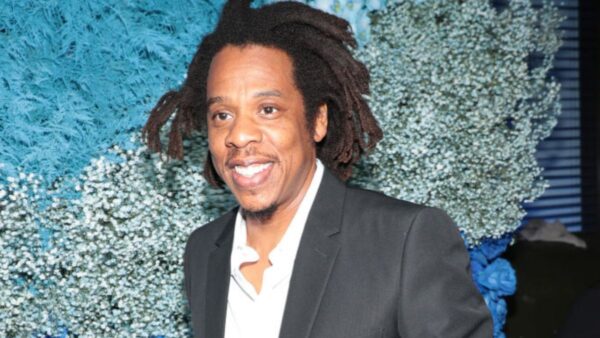
Few figures embody that tension more than Jay-Z, whose rise from Brooklyn’s Marcy Houses to billionaire status draws admiration and debate. The Roc Nation founder has pushed back, arguing that outrage at billionaires can oversimplify deeper structural challenges.
“It’s almost like a cop-out,” he said in an interview with GQ, explaining that blaming wealthy individuals can distract from fixing the systems that create inequality in the first place.
He also challenged the notion that morality changes once someone crosses a financial threshold. “Morality is not defined by a dollar amount,” he said. “If it’s a cutoff like, ‘All millionaires are bad,’ at $999,000, I’m good? It can’t be that way.”
He added, “I got successful the hard way, in spite of the way the system is set up.”
His counter to the system seems to have been to invest in community programs, scholarships, and economic initiatives.
During the pandemic, his foundation helped provide grocery assistance to thousands of families in Brooklyn public housing, addressing urgent food security needs, according to the NYCHA Journal.
The most debated effort was the 2022 Bitcoin Academy, launched in his childhood neighborhood. The program offered free classes on wealth building and digital finance, along with childcare, meals, smartphones, and internet access. Participants also received small Bitcoin grants intended to introduce them to emerging financial tools and opportunities.
“I remember when I was younger, growing up in the project, him and his team would come and give us toys and things like that,” one resident said, according to The Guardian. “My friends and I would call it this kind of ‘hood philanthropy.’ So for me, this is kind of like an evolution of that.”
Others appreciated the chance to break cycles of poverty. “It always felt like we’re at a family dinner,” a participant said. “Like that cousin that discovered Bitcoin is telling everybody else about it.”
But not everyone was convinced the initiative matched the community’s most urgent needs. Many thought he was out of touch.
“Half the people that’s going to go to that class, probably just going to go to the class for the $25 that you get. The other half of the people, they’ll probably take what they learn and forget it down the line,” one resident said.
Someone else said, “If you want to do something, fix this place up. We have a basketball court with no hoops. Our parks is broken up in here. He should be doing more for his community, not no Bitcoin Academy.”
Jay-Z’s story sits at the crossroads of two powerful narratives: the American dream of upward mobility and the modern demand for social accountability. His wealth represents the possibility of transformation — proof that someone from public housing can build a global empire.
But success is no longer judged solely by how much money you make. It is judged by how closely your solutions match the needs of the people you say you are trying to help.


Drug dealers turned business man ! Thanks got it