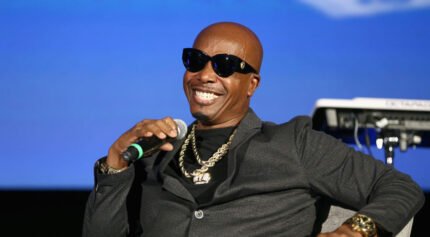

Nearly three decades after MC Hammer filed for bankruptcy, Mistah F.A.B. wants the narrative corrected. From his perspective, Hammer did not simply blow a fortune on marble floors and flashy cars.
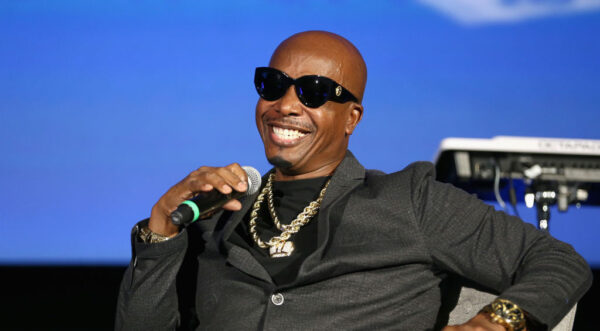
He spent millions building an empire.
He also employed people from his community and brought hundreds of them along for the ride.
Still Can’t Touch Him
The Oakland rapper F.A.B. made the case for Hammer during an appearance on B High TV on March 26. He called the “U Can’t Touch This” performer hip-hop’s first true megastar in a video clip that is circling anew on social media.
Before rappers routinely landed sneaker deals and built global brands, Hammer had a Mattel doll. He had a Saturday morning cartoon. He appeared in major commercials. He launched blockbuster tours. His empire came with the overhead of a small corporation.
Here is the detail that reframes the whole story. According to F.A.B., Hammer still receives performance offers worth as much as $500,000. He once turned down $250,000 to perform only two songs.
When detailing how his mentor moves, he said, “And there are still offers on the table for half a million for a show.”
B High added, “Yeah. Hell, Hammer had to turn down the 50 years of hip-hop because he just didn’t feel like doing it.”
F.A.B. continued, “I watched Hammer telling people, ‘I’m cool.’ Yeah. I watched him tell folks like, ‘Man, Hammer, man, we got a quarter million for you, man. We just want you to come do two songs.’ That man said, ‘Nah, I’m cool.’”
The anecdote complicates the popular image of a celebrity who lost everything. Whatever Hammer’s private finances look like today, he apparently still has enough earning power to reject a substantial check.
That ability to walk away from money traces back to the most important lesson Hammer shared with F.A.B.: “Know your no.”
Hammer’s problem was never an inability to earn. He believed too many stories from people who needed his help.
“He said, ‘I can always make money. I never had a problem making money,'” F.A.B. recalled. “My trouble was I believed every story.”
At his commercial peak, the money seemed limitless. His 1990 album, “Please Hammer, Don’t Hurt ‘Em,” became the first hip-hop album certified diamond.
According to Blue Tree Savings, he reportedly earned close to $33 million in 1991 alone, through record sales, touring, merchandise and endorsements. Some estimates put his fortune above $70 million at its height. Celebrity net worth figures are estimates, not audited disclosures, so treat the number with some caution.
His expenses matched his income. Hammer reportedly employed around 200 people. Payroll and entourage costs reportedly ran near $500,000 a month. He bought luxury cars, aircraft and racehorses. He poured millions into a sprawling Fremont, California estate.
But F.A.B. insists the spending wasn’t just extravagance.
Hammer hired friends, relatives and people from struggling Oakland neighborhoods. He wanted to give them legitimate work and pull them out of dangerous situations. “Hammer gave us hope,” F.A.B. said. “Hammer paid for our baseball teams when we was young.”
The model collapsed when record sales slowed and tastes shifted. Income could no longer cover the overhead. Hammer filed for Chapter 11 bankruptcy protection on April 1, 1996. Reports placed his debt near $13 million. The case later converted to Chapter 7. His Fremont mansion sold in 1997 for roughly $5.3 million.
The trouble didn’t end with the house. The federal government later pursued close to $780,000 in taxes and penalties tied to his 1996 and 1997 income. In 2015, a federal appellate court rejected his bid to block the IRS from collecting.
Celebrity Net Worth currently pegs Hammer’s fortune at around $2 million.
His post-bankruptcy career tells a fuller story. He kept performing. He entered ministry. He positioned himself inside Silicon Valley before celebrity tech investing became fashionable, with reported stakes in Square, Bump Technologies and Twitter, now X. He also advised Flipboard.
Hammer told F.A.B. he’d do it all again, cost included.
“If my sacrifice was the money I lost by investing in my people, taking hundreds of people around the world, saving lives, providing jobs,” F.A.B. quoted him as saying, “I would do it again in a heartbeat.”
The lesson isn’t that generosity destroys wealth. It’s that compassion still needs controls. Payroll has to match real revenue. Lifestyle has to shrink when income does. Not every compelling story deserves a check.
Hammer’s real lesson to F.A.B. was simple: “No” is a complete sentence. Sometimes it’s worth $500,000.