

Nearly four years after Irene Cara’s death, her representatives have uncovered a six-figure sum in royalties that the singer never collected.
The discovery adds a frustrating final chapter to Cara’s financial history. Her work enriched record labels and film studios, yet she spent years fighting for the money she said she was owed.
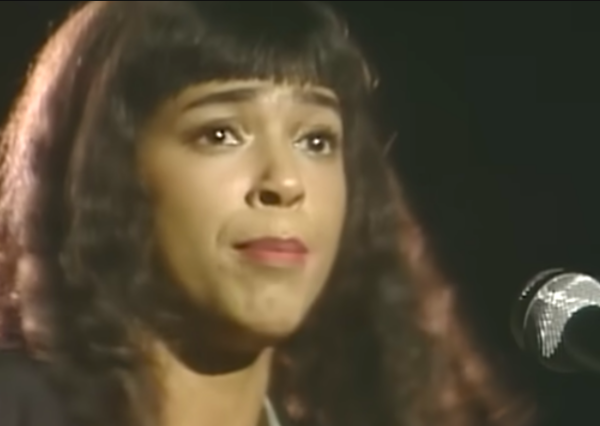
ShoutFactoryVEVO)
Missing Money
According to probate court documents obtained by TMZ, Cara’s business manager, believed to be Betty McCormick, recovered $333,353 in royalties earned before the singer died in 2022. Chappell Music reportedly held $246,000, Phonographic Performance Limited held $78,000, and Unidisc Musique held approximately $8,000.
The money is welcome news for Cara’s estate.
Its discovery raises an uncomfortable question: How did such a substantial sum go uncollected while she was alive? After all, she had a business manager who was supposed to be handling her financial affairs.
The manager is asking the court to approve a 15 percent commission, reportedly based on a verbal agreement with Cara before her death in 2022. That fee would total approximately $50,003. She is said to be negotiating future licensing deals as the estate searches for a buyer for Cara’s music rights.
McCormick often seems to be on the outs with the estate.
According to Radar Online, in 2023, she entered the probate proceedings as a creditor. She submitted claims for $4,393 in cremation and burial expenses and $1,599.50 for biohazard cleanup at Cara’s Florida home. Neither request was contested.
The estate’s co-administrators did, however, object to a separate claim filed by Midwest Talent Management Inc., McCormick’s company.
Cara’s sister, Antoinette Greer, petitioned the court on Jan. 27, 2023, to appoint Michelle Spice and Tashika Ortiz as co-administrators. Greer identified herself, nephews Michael and Mario, and nieces Marion and Michelle among Cara’s heirs.
The co-administrators sought authority to continue operating Caramel Productions, the company Cara wholly owned. Court filings said the administrators needed account access to collect income, pay expenses and decide whether to distribute the assets or sell the company.
The estate sold the Largo, Florida, home where Cara died. A judge approved the $499,000 sale about a year after her death.
Cara never entirely abandoned music. She performed from 2005 to 2010 with Hot Caramel, the all-female band she formed in 1999, according to the New York Post.
Vocalist Audrey Martells and guitarist Sheryl Bailey said Cara produced and arranged every song. McCormick also said Cara re-recorded “Fame” and “Flashdance” so she could own those masters.
“I think she was doing OK, living off her royalties and licensing her music and doing things her way,” Martells, her friend and bandmate, said.
Cara’s movie career was launched in the 1976 musical drama “Sparkle” as Sparkle Williams. She starred as the gifted youngest member of a Black sister act from Harlem. The group’s rise was threatened by predatory men, including Max Gerber, a white businessman with alleged Mafia connections who wanted control of Sparkle’s career and music publishing.
Gerber was fictional, but his attempt to secure the rights to a young Black singer’s future now feels uncomfortably close to Cara’s real-life experience.
“Fame” made Cara an international star in 1980. Three years later, she co-wrote and performed “Flashdance… What a Feeling,” a No. 1 hit that earned her an Academy Award, a Golden Globe and two Grammys, according to The Washington Post.
Her royalty statements told a far less glamorous story. After all that success, a trusted music executive at her label, RSO, induced her to leave the label and follow him. He would take control of her career, exploiting her out of millions.
Cara later described her contracts with record executive Al Coury as “unjust and oppressive.” In 1985, she filed a $10 million lawsuit accusing Coury and his companies of withholding royalties.
Syndicated gossip columnist Liz Smith, in a 1993 column, “Remember Irene Cara?” stated she received only $183 in royalties during her four years under Coury.
A Los Angeles jury awarded Cara $1.5 million that same year, although bankruptcy of the corporate defendants reportedly made collecting the full judgment difficult.
Cara believed the lawsuit prompted the music industry’s “good ol’ boy network” to turn against her.
Her manager, who claimed to have worked closely with her, offered a different assessment, telling The Washington Post: “She was not a victim crying racism. I don’t think she was really blacklisted, either.”
The missing money has finally surfaced. The woman who earned it, however, is not here to cash the check.
A medical examiner determined that Cara died from arteriosclerotic and hypertensive cardiovascular disease. She was 63.
