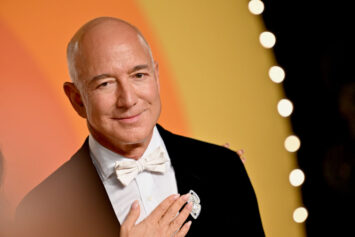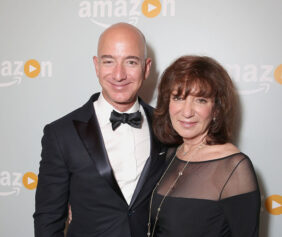

Jeff Bezos knows what it means to have someone invest in his future.
When he needed money to build an online bookstore in 1995, most of the people he approached declined. His parents reached into their savings and gave him $245,573.

Inside Amazon
Three decades later, Amazon is an e-commerce giant built on the work of people who pack boxes, stock shelves and deliver orders. The company’s latest pay increase has renewed an old question: Can the workers who helped make Bezos wealthy build financial security of their own?
When Bezos approached roughly 60 prospective investors while trying to raise $1 million, only 22 said yes, according to Fortune
His mother, Jackie, and stepfather, Mike Bezos, were among those early investors. Their 1995 investment represented a substantial share of their savings. Bezos warned them they could lose it, but they backed their son anyway.
When thinking about his stepdad’s act of faith, he said, “He wasn’t making a bet on this company or this concept. He was making a bet on his son, as was my mother.”
When Amazon went public in 1997 at $18 a share, raising $54 million, the company had grown from roughly 10 employees to more than 600. By 1998, Bezos had become a billionaire as Amazon’s stock surged; Forbes reported that he owned about 41% of the company at the time. Today, Forbes estimates Bezos’ net worth at $366 billion, ranking him second among the world’s richest people.
His parents made what would become one of history’s most successful venture investments. According to Fortune’s calculations, after donating 595,027 Amazon shares to the Bezos Family Foundation, the remaining stake from the original 1.4 million-share investment made by Jeff Bezos’s parents would be worth an estimated $51.7 billion if held today by his father, Mike Bezos, who was widowed in 2025. His siblings, Mark and Christina, each invested $10,000 in Amazon in 1996; financial reports show those individual stakes would each be worth over $1.5 billion today had they never sold any shares.
But as Amazon grew, so did scrutiny over worker pay. In response, the company is raising starting pay by a dollar for full-time U.S. core operations employees, bringing the hourly minimum to $20. Amazon says average pay will now reach nearly $24 an hour, alongside perks like grocery discounts and healthcare coverage starting at five dollars a week.
At $20 an hour, a worker who works 40 hours a week would earn $41,600 a year before taxes.
Drivers employed by delivery partners aren’t covered, though Amazon announced their starting pay is now $24 an hour.
Research complicates the pitch. An analysis by the National Employment Law Project found that warehouse workers in high-earnings counties with Amazon fulfillment centers earned 18% less — roughly $822 less per month — than warehouse workers in comparable high-earnings counties without Amazon facilities.
A 2020 federal study cited by CBS News listed Amazon among large employers of workers on SNAP or Medicaid..
Amazon’s upbeat ads promise a life-changing job. Workers describe grueling production targets and physical strain. In one international survey, many respondents linked Amazon’s productivity monitoring to harm to their physical or mental health. Amazon disputed the findings and pointed to safety improvements.
In 2025, workers and allies staged Make Amazon Pay protests and strikes. Protesters also boycotted the Met Gala, sponsored by Bezos and his wife, Lauren Sánchez Bezos. An anti-billionaire group projected a video onto their Manhattan penthouse of Mary Hill, a 72-year-old Amazon warehouse worker.
This is powerful!
— Power to the People ☭🕊 (@ProudSocialist) May 6, 2026
Mary Hill, a 72 year-old Amazon warehouse worker, has a message for Jeff Bezos and she projected it onto his $120 million penthouse in New York City. pic.twitter.com/EYbEgbP0Ua
“Shame on you, Jeff Bezos,” she said. “The people that need to be being celebrated at the Met Gala are the workers — people like me.”
The criticism highlights a stark contrast in the Bezos family history: Jeff Bezos’s mother, Jackie, once faced similar economic hardships as a young single parent. Before marrying Mike Bezos, she raised Jeff while working as a secretary for $190 a month. Unable to afford a telephone in her apartment, she relied on a walkie-talkie system rigged by her father to stay in touch with her parents.
The contrast is heightened by the estimated $55 million Bezos spent on his 2025 wedding in Italy.
Bezos’s mom and stepdad invested because they believed in what he could become. Amazon’s raise is an investment, too.
Whether it’s enough for workers to thrive, its commercials can’t say.