
Long before college basketball players could turn Instagram followers, sneaker buzz and viral highlights into millions of dollars, Lonzo Ball had all three — plus something most athletes couldn’t create at any price.
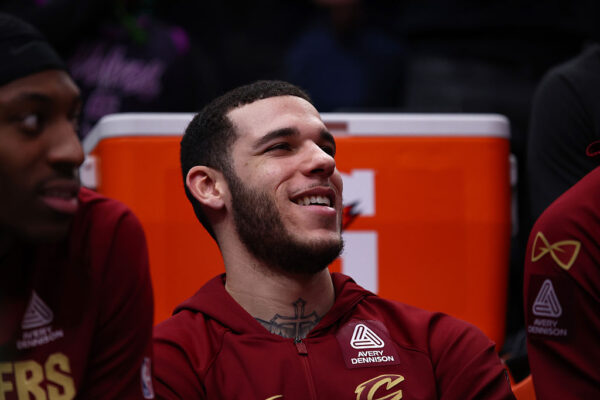
He had everybody talking.
By the time Ball arrived at UCLA in 2016, the 6-foot-6 point guard wasn’t simply another five-star recruit. He was the centerpiece of basketball’s most talked-about family, fresh off an undefeated 35-0 season at Chino Hills.
His father, LaVar Ball, made sure people knew the Ball name. Then Lonzo backed up the hype. He led the nation in assists, helped UCLA win 31 games and became the No. 2 pick in the 2017 NBA draft, according to LakersNation.
Too Early For NIL Cash Flow
But college basketball wasn’t ready to let him cash in.
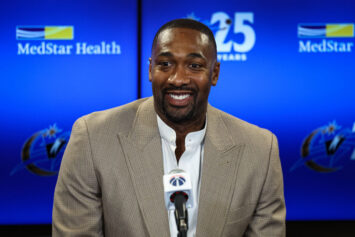
Former NBA star Gilbert Arenas believes that timing cost Ball an eight-figure payday.
“If there was NIL when Zo was coming into college, the number would have been ridiculous. The landscape would have been different again anyway, right? Because him coming in, now you have Big Baller Brand and you get to sell off your likeness in there,” Arenas explained on a July 19 episode of “The LaVar Ball Show.”
“You’re talking about he would have been probably making $10-20 million,” Arenas continued. “It would have been just … You don’t know what that would have looked like.”
Twenty million dollars for one season of college basketball sounds outrageous.
Until you look at what athletes are making now.
NIL stands for name, image and likeness. It lets college athletes profit from their fame through endorsements, appearances and social media. Before NIL, a player could fill an arena and sell jerseys without personally profiting from that popularity.
According to Front Office Sports, AJ Dybantsa reportedly landed an NIL package worth around $7 million at BYU, with Nike and Red Bull connected to his brand.
The best comparison for Ball may be Bronny James.
James’ estimated NIL value reached approximately $5.9 million before he had established himself at USC. His deals included Nike, Beats by Dre, Google and PSD Underwear.
His value wasn’t based only on basketball. James averaged 4.8 points, 2.8 rebounds and 2.1 assists in 25 games at USC. Ball averaged 14.6 points, 7.6 assists, and 6.0 rebounds at UCLA.
But Bronny had something statistics couldn’t measure: LeBron James.
That shows how NIL works. Brands aren’t only paying for points. They are paying for attention, followers and the ability to reach consumers.
Lonzo had plenty of that.
LaVar turned the Ball family into sports entertainment before anyone called it an NIL strategy. Lonzo’s highlights were everywhere. And Big Baller Brand gave them their own company, ready to sell products tied to the Ball name.
The sneaker money hints at what was possible.
Before the 2017 NBA draft, Nike, Adidas and Under Armour reportedly passed on LaVar’s proposal to license Big Baller Brand rather than simply sign Lonzo. ESPN reported traditional offers could have reached $1.5 million to $2 million per year.
The Balls went their own way and introduced Lonzo’s ZO2 sneaker for $495, The Bleacher Report noted.
Now imagine that happening while he was still at UCLA. Add appearances, sponsored posts, commercials and the Los Angeles market, and the money could have piled up quickly.
Other athletes have shown how fame boosts value. Arch Manning has carried a multimillion-dollar NIL value, helped by one of football’s most famous family names.
That doesn’t prove Arenas’ $20 million estimate.
Reported NIL valuations are estimates, not signed contracts.
Still, Arenas’ point isn’t hard to understand.
Lonzo had elite talent, national attention, a famous family and a business built around his name. Then he delivered. UCLA went from 15-17 the season before his arrival to 31-5 and the Sweet 16.
Could that have produced $20 million in one season? There is no way to know. But $10 million suddenly doesn’t sound nearly as crazy.
Lonzo Ball didn’t miss the NIL era by decades. He missed it by roughly four years.
Those four years may have cost him millions.