

The music industry has made billions selling Black culture to the world. Now, Top Dawg Entertainment President Terrence “Punch” Henderson says the people who shape that culture are being pushed out of the executive suites where the real money and power reside.
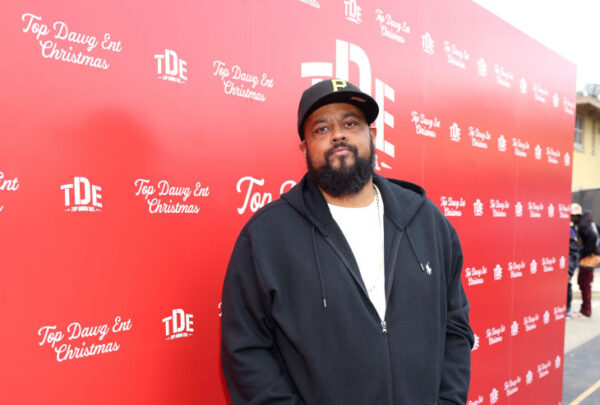
Henderson, who manages Grammy-winning superstar SZA, recently took to X to question what he sees as a disturbing shift in the business.
His comments followed a massive round of layoffs at Universal Music Group (UMG), including several prominent executives who shaped some of music’s biggest careers.
“Where have all the black ppl gone in the music business??” he asked.
Where have all the black ppl gone in the music business??
— Punch TDE (@iamstillpunch) October 14, 2026
The question was hardly rhetorical.
“The black executive in music is getting removed and replace systematically. Black women are the first to go in these industry lay offs. Which is the biggest mistake. Black women is where everything dope in the culture comes from. They are the culture. Smh,” Henderson would then tweet.
The black executive in music is getting removed and replace systematically. Black women are the first to go in these industry lay offs. Which is the biggest mistake. Black women is where everything dope in the culture comes from. They are the culture. Smh
— Punch TDE (@iamstillpunch) October 14, 2026
His criticism arrived as UMG implemented another round of cuts tied to a restructuring first announced in January 2024.
According to Variety, the October shake-up includes Def Jam chairman and CEO Tunji Balogun, who will remain through year’s end to assist with the transition.
Interscope executives Nicole Wyskoarko and Sam Riback are also departing. Republic Records chairman and co-CEO Jim Roppo is reportedly leaving, and several international executives are stepping down or shifting roles.
The exits of Balogun and Wyskoarko, both Black executives, have intensified questions about representation in an industry that has long depended on Black artists to drive revenue and cultural influence.
UMG’s restructuring comes despite strong financial performance.
The company generated nearly $7.2 billion in revenue during the first half of 2026, up 5.3% year over year.
However, it is absorbing costs from its $775 million acquisition of Downtown Music while navigating slowing streaming growth and changing consumer habits.
UMG said the restructuring reflects its efforts to introduce new technology, improve efficiency and invest in emerging opportunities.
The cuts are part of a broader industry contraction. Warner Music Group and Sony Music have also reduced staffing in recent years.
But Henderson’s concerns extend beyond corporate cost-cutting.
The numbers paint an uncomfortable picture of an industry that knows how to profit from Black talent but has been far less successful at putting Black professionals in charge.
A 2021 study from the University of Southern California’s Annenberg Inclusion Initiative examined 4,060 executives across 119 music companies, including record labels, publishers, streaming platforms and concert promoters.
Only 7.5 percent of executives at the vice president level or higher were Black. Black women represented just 3 percent.
At the top, among CEOs, presidents and chairpersons at 70 major and independent music companies, just 4.2 percent were Black.
Meanwhile, Black artists represented 37.7 percent of performers on popular music charts during the nine-year period researchers examined.
Across the industry, white male executives outnumbered Black female executives by nearly 18 to one.
The study predates the layoffs, but its findings lend weight to Henderson’s concerns about who holds power.
He is hardly the only industry heavyweight questioning that imbalance.
Earlier this year, Alicia Keys called out the music industry’s “good old boy network,” highlighting barriers women face in a male-dominated business.
The Grammy winner has built an estimated $150 million empire, but she still questions the structures that keep women out of influential positions.
Henderson understands the importance of executive power firsthand.
TDE helped launch the careers of Kendrick Lamar, SZA and Schoolboy Q, transforming an independent Black-led operation into one of hip-hop’s most influential companies.
Executives determine which artists receive major investments, how marketing budgets are distributed and who negotiates lucrative deals.
Those decisions determine who builds generational wealth and who contributes to someone else’s bottom line.
For a business that has spent decades cashing in on Black creativity, Henderson’s warning raises an uncomfortable question: Who will control the culture when the people who helped build it are no longer in the room?
