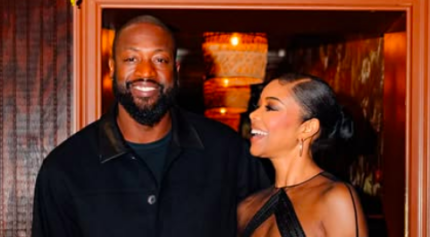

Dwyane Wade earned millions during his NBA career, but the three-time champion admits that earning money didn’t mean he knew how to manage it. Like many young athletes who suddenly find themselves wealthy, the former Miami Heat superstar initially saw his fortune as an opportunity to buy everything he had once dreamed of owning.
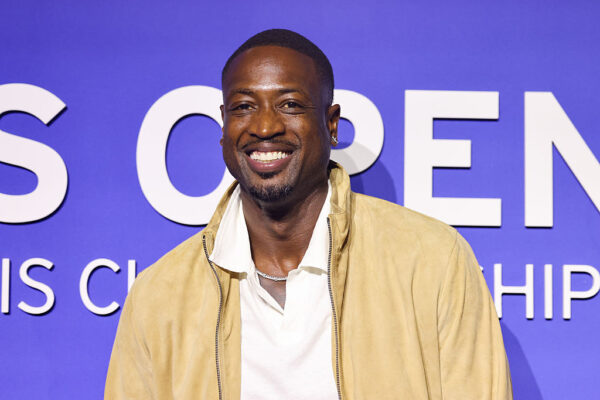
Becoming Money Wise
From luxury cars to expensive homes, Wade enjoyed the rewards of professional basketball. However, a devastating injury forced him to confront an uncomfortable reality: His multimillion-dollar income could disappear long before his financial obligations did.
During a recent appearance on the “Let It Fly Podcast,” Wade spoke with hosts Jared Dillinger, Sol Mercado and Suzy Gamboa about life after basketball and how an injury changed his financial outlook.
“My mindset started to change. I was like, ‘All right, we’re not just about to just spend money no more. We’re actually going to like, find a money manager,'” Wade explained.
“Like, I come from the hood. I was just spending. I was just, ‘Let me get that car. Let me get that house.’ Then I had to will it back in because I was like, ‘Oh, this could be taken away from me like this.'”
That realization followed Wade’s emergence as one of basketball’s biggest stars. He led Miami to its first NBA championship in 2006 and subsequently secured a three-year, $63 million contract.
However, his growing fortune came with increasingly expensive habits.
One of Wade’s biggest weaknesses was his love of luxury cars. His financial adviser, Ginger, eventually encouraged him to sell about 16 vehicles, including a Maybach that reportedly cost $6,000 a month.
“My financial advisor, Ginger, came in and said, ‘Okay, so that Maybach, the one that costs you $6,000 a month, you don’t drive it. How about we get rid of that?'” Wade recalled.
Initially resistant, Wade eventually accepted that maintaining expensive vehicles he rarely drove was undermining his financial future.
His experience is hardly unique among NBA millionaires.
Shaquille O’Neal famously admitted to spending his first $1 million paycheck almost immediately. The basketball legend bought a $150,000 Mercedes-Benz, then purchased additional luxury vehicles for his parents. Jewelry, clothing and other lavish purchases followed.
What O’Neal failed to calculate were the taxes and deductions associated with his earnings.
“I had no idea what FICA, and income, state tax, sales tax were,” O’Neal admitted while discussing his early financial mistakes.
The experience reportedly left him approximately $50,000 to $60,000 in debt and motivated him to educate himself about money management.
Klay Thompson learned a similar lesson, though at a less costly price.
During a 2019 interview with “Uninterrupted,” Thompson acknowledged purchasing enormous amounts of designer clothing during his early NBA years.
“I had so many clothes it didn’t even make sense,” he admitted, explaining that he wore only about 5% of his wardrobe.
Kevin Durant has also acknowledged spending beyond his earnings early in his career.
“I remember a year where I spent more money than I made,” Durant revealed on the “Unguarded” podcast. He admitted ignoring financial advice because he was young and enjoying his newfound wealth.
These experiences illustrate a broader challenge within professional sports, where extraordinary earnings can arrive before athletes develop the financial skills necessary to preserve them.
Wade is now using those lessons to help the next generation avoid similar mistakes.
As chairman of JPMorgan Chase’s Athlete Council, he is working alongside prominent athletes, including Tom Brady, Sue Bird and A’ja Wilson, to improve financial education from college through retirement.
The initiative provides specialized financial advisers and guidance to help athletes navigate endorsement deals and name, image and likeness (NIL) opportunities.
For Wade, whose business interests now extend into sports ownership, fashion and wine, the transition from impulsive consumer to investor represents a significant evolution.
His financial lesson extends beyond basketball: Earning millions can create wealth, but understanding how to manage those millions determines whether that wealth lasts.