

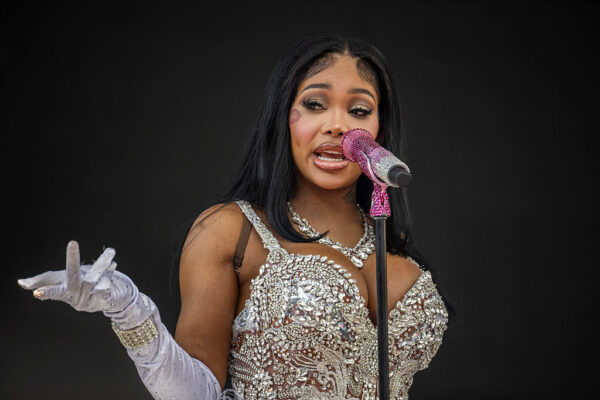
Summer Walker wants control of the business she helped build. However, walking away from the companies that helped turn her into one of R&B’s biggest stars could come with a hefty price tag.
The Grammy-nominated singer is fighting two legal battles over unpaid royalties, recording obligations and digital ownership — as well as the right to profit from her increasingly valuable brand.
On Nov. 18, Walker countersued Interscope Records, seeking at least $20 million. Interscope and its parent company, Universal Music Group, sued her in October, seeking at least $50 million over her alleged failure to fulfill her recording contract.
The combined claims exceed 10 times Walker’s estimated $6 million net worth, according to Celebrity Net Worth.
Interscope is seeking compensation for music Walker allegedly failed to record under her contract. Meanwhile, the singer alleges the company has already profited from material it had no contractual right to monetize.
According to Billboard, Walker’s countersuit accuses Interscope of breach of contract and unjust enrichment. The dispute centers on her independently produced videos and YouTube content.
Walker acknowledges that Interscope has contractual rights to commercially exploit her music and likeness. However, she argues those rights do not extend to all of her independently created digital content.
Her ties to Love Renaissance (LVRN) further complicate the dispute. She signed with the Atlanta-based company in September 2017. Weeks later, she signed an expanded recording deal with Interscope.
In a separate lawsuit filed in Georgia on Aug. 28, Walker alleges that LVRN secretly operated a YouTube account in her name.
According to Rolling Stone, she claims the company deleted historical account data before transferring control of the account to her. She also alleges she never received any revenue generated through it.
How Interscope subsequently obtained access to the disputed content remains unclear. In her separate lawsuit against the record label, Walker is seeking a financial accounting to determine how much revenue the material generated and who collected it.
Her complaints against LVRN also include allegations of unauthorized Amazon merchandise sales, improper budget allocations and excessive business expenses.
Meanwhile, Interscope’s $50 million lawsuit hinges on the distinction between a mixtape, an extended play (EP) and a studio album.
According to the October lawsuit, Interscope maintains Walker has delivered only three of her five contracted studio albums.
Her 2018 commercial mixtape, “Last Day of Summer,” featured her breakthrough single “Girls Need Love.” The song received a major commercial boost because she was able to get Drake on a remix of the song.
Despite its success, Interscope considers the release a “preliminary project” that does not count toward her album obligations. Neither does her 2019 four-track EP, “CLEAR.”
The distinction matters. A commercially successful release does not automatically satisfy a contractual recording commitment.
Interscope recognizes “Over It,” “Still Over It” and “Finally Over It” as qualifying albums. All three reached the top two on the Billboard 200. However, the label maintains that Walker still owes two studio albums and an additional EP.
Walker attempted to terminate her agreement effective Aug. 27 under California Labor Code Section 2855, commonly known as the seven-year rule.
The law generally limits the enforcement of personal service contracts to seven years. However, an exception allows recording companies to pursue damages for undelivered contractual recordings.
LVRN is also fighting back.
On Nov. 9, the company filed counterclaims alleging Walker withheld contractual payments. According to AllHipHop.com, LVRN claims entitlement to 20% of her songwriting performance royalties and 15% of income from business opportunities it secured.
The company also alleges Walker stopped paying its agreed-upon 7% share of her 2026 arena tour proceeds.
In a Nov. 19 amended counterclaim, LVRN maintained that Walker or her representatives approved touring expenses. It also detailed its role in securing her opening slot on Chris Brown’s 2025 Breezy Bowl stadium tour.
A 2021 contractual amendment had already ended LVRN’s exclusive rights over Walker’s touring, merchandising and commercial use of her likeness. The revised agreement limited the company’s commissions on ancillary income to opportunities it had directly secured or introduced.
Walker’s attorneys dispute LVRN’s counterclaims.
Both legal battles remain unresolved. A hearing in the Interscope case is scheduled for April 15, 2027.
For Walker, the fight extends beyond unpaid earnings and recording commitments. Her financial independence could ultimately depend on how much control she retains over her music, her image, and the audience she’s cultivated.
