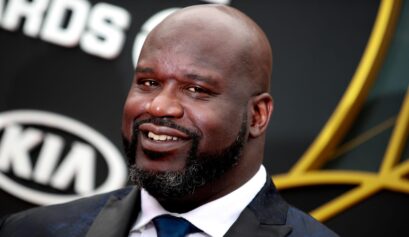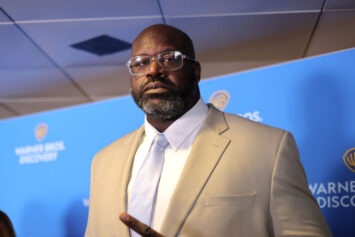

Shaquille O’Neal says the key to building wealth is living well below your means. The NBA Hall of Famer recommends saving and investing 75 percent of every paycheck while living on the remaining 25 percent — a financial strategy he credits with helping him build a successful investment portfolio after his playing career.

The Formula
“The first thing you should do is save 75 percent,” O’Neal said in a 2019 interview with The Wall Street Journal that has recently resurfaced and sparked interest on social media. “Then live off the other 25 percent.”
O’Neal said the approach was inspired by financial advice he received early in his career and has guided his wealth-building strategy ever since.
In a separate conversation with CBS News, O’Neal explained what separates people who are merely rich from truly wealthy people. He recalled asking a 67-year-old man how he managed to stay financially secure for decades. The man broke it down using $100 as an example. Rich people split their money in half, saving 50 and spending the rest. Wealthy people take it a step further, splitting that remaining half again so they save more than they spend.
O’Neal said the lesson clicked once he applied it to his own career. Early on, he leaned on his NBA salary to cover everything. Once he had children and his responsibilities grew, he shifted strategy, treating his NBA checks as untouchable savings and living instead off his endorsement money.
That mindset paid off. O’Neal earned an estimated $286 million in NBA salary over 19 years, and endorsements pushed his earnings even higher. Today, the Hall of Famer is estimated to be worth roughly $500 million, with business ventures reportedly generating about $95 million a year through Big Chicken, Reebok and a major stake in Authentic Brands Group, which owns Sports Illustrated, Forever 21 and Champion.
His investment portfolio spans technology companies, commercial real estate, restaurant franchises and consumer brands. One of his most recognizable ventures is Big Chicken, the fast-casual chain he co-founded in 2018, which has expanded across the U.S. and internationally.
“I do everything but nothing. True leaders don’t micromanage,” O’Neal said, describing his management style. He prefers surrounding himself with experts, setting the vision and letting executives handle execution.
His financial advice comes as Americans keep searching for practical ways to build wealth despite inflation and economic uncertainty. Financial planners admit that saving 75% of every paycheck isn’t realistic for most households. Still, experts agree with the underlying philosophy. Automate savings. Invest consistently. Avoid increasing spending every time income rises.
For those who can’t follow Shaq’s exact formula, more traditional strategies like the 50/30/20 rule may work better. The point isn’t to mimic his percentages. It’s to adopt his mindset of making saving the first priority instead of the last.
O’Neal isn’t the only athlete who’s built wealth this way. Rob Gronkowski has said he technically never spent a single penny of his NFL salary.
“I’m very frugal and lived with a roommate my first couple years,” Gronkowski said on the “Bussin’ With the Boys” podcast. “I was a second-round pick, so it was like a four-year, $4 million deal. I got $2 million in my bank.”
He lived instead off endorsement deals with brands like Dunkin’ Donuts and Visa, treating his football checks as untouchable. Gronkowski also turned a tip from his contractor into a fortune, putting $69,000 into Apple stock in 2014 that grew to over $600,000.
Marshawn Lynch reportedly retired with nearly $50 million saved the same way, according to Inc., and former safety Glover Quin saved 70 percent of his salary over a decade-long career, according to ESPN.
That mindset helps explain why O’Neal’s business career has become nearly as impressive as his basketball résumé.
The championships and Hall of Fame induction secured his legacy on the court. His post-retirement success proves the biggest wins sometimes happen far from the spotlight. Real wealth, as O’Neal tells it, isn’t measured by how much you make. It’s measured by how little of it you touch.