

Donald Trump is stepping back from talking about extending his presidency beyond constitutional limits, but that doesn’t mean he’s abandoning his influence over the Republican Party’s future. Instead, the 79-year-old commander in chief seems to be positioning himself as the ultimate kingmaker, quietly orchestrating the political fortunes of those who could carry his torch forward.
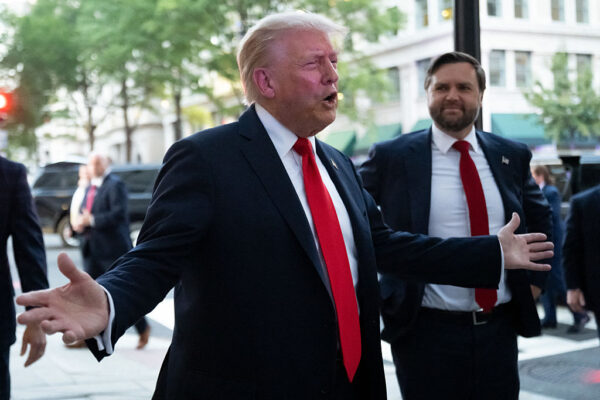
Controlling to Candidates?
While Trump has entertained audiences with talk of finding ways around the 22nd Amendment, his actions suggest a more pragmatic approach to maintaining his legacy through carefully chosen successors.
The clearest evidence of this strategic pivot, according to NBC News, comes through Trump’s financial backing of Vice President JD Vance’s campaign war chest.
Since May, Trump has been directing 5 percent of his political donations to Vance’s Working for Ohio political action committee, funneling $245,000 into the vice president’s coffers over just two months. This arrangement represents more than mere generosity between running mates; it signals Trump’s investment in cultivating his political heir apparent for the battles ahead.
This financial partnership carries profound implications for the Republican Party’s trajectory beyond Trump’s presidency. At 41, Vance represents the youngest vice president in decades and embodies the continuation of Trump’s faux populist movement with a generational twist. The funding arrangement provides Vance with essential resources to maintain his political infrastructure while fulfilling his demanding role as the Republican National Committee’s finance chair.
More importantly, it grants Vance access to Trump’s extensive donor database, a treasure trove of small-dollar contributors who form the backbone of the MAGA movement.
The president has been characteristically coy about his 2028 preferences, offering measured praise for his vice president while keeping other options open. Trump recently acknowledged viewing Vance as his “most likely” heir apparent, describing him as someone who would “probably be favored at this point.”
However, The Daily Mail reports, the president has also suggested that Secretary of State Marco Rubio represents another compelling option, even floating the possibility of a joint ticket between the two rising Republican stars.
Trump’s comments about potential combinations have created an intriguing dynamic within his inner circle. The Wall Street Journal reports he asked Vance directly about ticket arrangements, musing whether it might be “Vance-Rubio” or “Rubio-Vance” at the top of the 2028 ballot. This playful speculation reflects Trump’s awareness that his influence extends beyond his own political future to shaping the next generation of conservative leadership.
The mechanics of Trump’s support system reveal the sophistication of his political operation. Through the Trump National Committee JFC Inc., donations are strategically allocated with 77.5 percent going to Trump’s Never Surrender leadership PAC, 17.5 percent to the Republican National Committee, and five percent to Vance’s Working for Ohio committee. This formula can be adjusted at any time, giving Trump flexibility to increase or decrease support based on changing political circumstances.
The arrangement stands in stark contrast to Trump’s first term, when Vice President Mike Pence operated his political activities independently. Pence funded his political travel and activities through his own leadership PAC without receiving direct financial support from Trump’s fundraising apparatus. The difference highlights how Trump has evolved his approach to succession planning, recognizing the value of nurturing potential heirs while they serve in supporting roles.
It makes sense that Trump is trying to extend his administration and Project 2025 into the next decade, since he can’t run for a third term. Constitutional scholars have been weighing in on Trump’s occasional suggestions about extending his presidency, according to Newsweek.
Supreme Court Justice Amy Coney Barrett recently addressed these speculations directly, telling Fox News that the 22nd Amendment’s two-term limit is unambiguous. Her comments carry significant weight given the Supreme Court’s role as the ultimate arbiter of constitutional questions.


