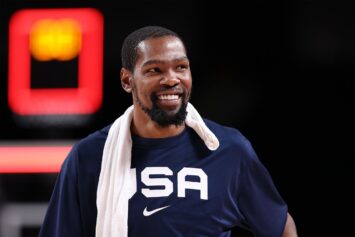

In a league where multimillion-dollar contracts can give way to financial hardship, former NBA player Iman Shumpert says he took steps to avoid a fate that has plagued many professional athletes: bankruptcy.
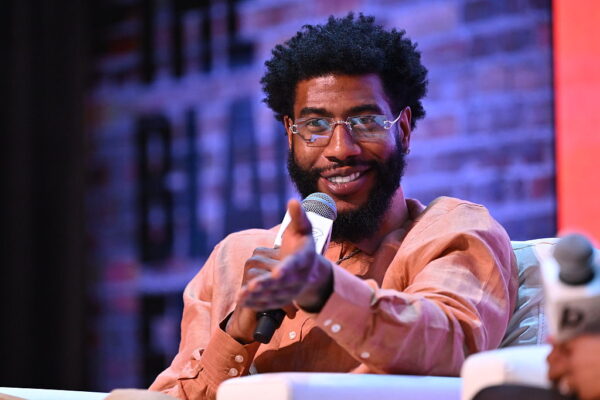
Minding His Money
Studies and league officials have long warned that a notable share of retired NBA players encounter financial trouble within a decade of leaving the game. The reasons are often consistent — sudden spikes in income followed by equally sudden drops, unchecked lifestyle inflation, gaps in financial literacy and reliance on the wrong advisers. For some athletes, the spending patterns established during their highest-earning years continue long after their playing careers and paychecks have ended.
Appearing on “Club Shay Shay” on Feb. 25, Sumpert offered a blunt assessment of where things go wrong.
“They be spending it. [Players] be spending it,” he said.
Shumpert was not a supermax player who earned $300 million or $400 million.
According to Spotrac, the former NBA guard earned approximately $48,845,445 in salary over his 10-year NBA career (2011–2021). “I was broke. I remember broke,” said Shumpert, who was selected 17th overall by the New York Knicks in 2011.
Within months of entering the league, Shumpert made a decision that would define his career off the court: half of every paycheck would be removed before he ever saw it. His brother and financial adviser automatically diverted the funds.
“So, I never knew how much money I had,” he explained. “I just thought what I had in Bank of America.”
That artificial constraint created discipline. If he logged into his account and saw “a couple of hundred bands,” he wasn’t tempted to spend seven figures. Coming from overdraft fees and double-digit balances, six figures already felt extraordinary.
His largest contract came in 2015, when he signed a four-year, $40 million extension with the Cleveland Cavaliers, becoming part of the franchise’s historic 2016 championship run. His estimated net worth today is roughly $10 million.
The distinction between earnings and retained wealth is where many careers diverge.
Shumpert resisted lifestyle signaling.
While teammates upgraded to luxury vehicles, he drove a Jeep — a choice that once drew teasing from Carmelo Anthony. The message from peers was clear: you can afford more. Shumpert’s response was equally clear: he didn’t need more.
He also explored investment opportunities, including an early stake in Uber after recognizing similarities between its model and the private-driver concept depicted in the 1997 film B.A.P.S. The investment appreciated two to three times before he exited.
“I still made my money,” he said, though he acknowledged leaving additional upside on the table. Conservatism, in his case, prioritized liquidity and certainty over maximizing returns.
Off the court, Shumpert diversified his income streams.
He won “Dancing with the Stars” in 2021 — the first former NBA player to claim the mirrorball trophy — and pursued ventures in music and television.
His marriage to Teyana Taylor expanded their collective brand footprint, from reality TV to fashion and entertainment collaborations. Their 2023 separation and 2024 divorce brought financial headlines.
Viral claims suggested Shumpert transferred $10 million in real estate — assertions not supported by public filings.
According to Celebrity Net Worth, the couple owned one primary home together, purchased for $3 million and sold for $4 million.
Court documents detail disputes over account withdrawals and child support, including Shumpert’s request to adjust an $8,000 monthly payment based on income comparisons.
Taylor later paid a $70,000 contempt ruling tied to a gag order violation.