
In professional sports, contract size often brings increased scrutiny and expectations. For Anfernee “Penny” Hardaway, that attention came early in his career and remained a constant.
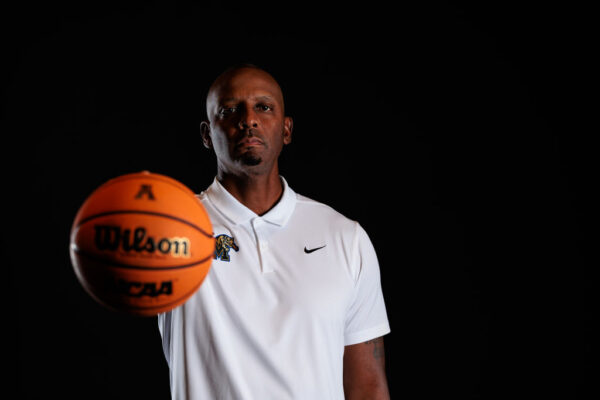
Was Penny Picked on?
By the mid-1990s, Hardaway had emerged as a leading player for the Orlando Magic and one of the NBA’s top-earning athletes. His financial success drew significant attention, with his endorsements and salary becoming as notable as his performance on the court.
After his rookie season, Hardaway signed a nine-year contract worth more than $70 million, a staggering figure at the time. Later, he signed a seven-year, $86.7 million maximum contract with the Phoenix Suns, paying him roughly $12.4 million annually placing him in the top tier of earners during an era when the average NBA salary hovered around $1.5 million.
“It’s been tough. Nobody said it was going to be fair,” Hardaway said in 2000, a year after he was traded from the Magic to the Suns, in a story that has resurfaced in the Basketball Network.
“I guess when you make as much money as I do, nothing is ever fair,” he continued. “You’re never supposed to be sick, you’re never supposed to be injured, you’re never supposed to miss a shot, you’re never supposed to lose a game.”
And when that value appears to decline — through injury, market shifts, or performance —the criticism intensifies.
Hardaway experienced that shift firsthand after suffering a serious knee injury in the late 1990s, a turning point that altered both his career trajectory and public perception.
“It just felt like, to me, toward the end of my career, that they gave up on me when I was injured,” he explained. “Just like with the media — they were all over me and then once I got injured, everybody just kinda pushed me away.”
The attention also extended to his relationships, particularly with former teammate Shaquille O’Neal. Media coverage at the time often characterized their partnership as a rivalry influenced by contract size and endorsement earnings, reflecting broader narratives about financial competition among top NBA players.
“Once they get a hold of something, they’re going to take it to another level,” Hardaway said. “They took Shaq and my relationship to another level. They took my injuries to another level when they didn’t know really what was going on.”
Off the court, Hardaway’s financial profile continued to expand.
His endorsement partnership with Nike and his signature sneaker line made him a marketing force, turning him into both an athlete and a brand. Over his NBA career, according to Celebrity Net Worth, he earned approximately $120 million in salary and another $20 million from endorsements, positioning him among the wealthiest players of his era.
Yet those earnings also shaped the narrative around his struggles.
“It’s just a harsh reality. That’s what really hurt,” he said, reflecting on the criticism. “I shouldn’t have said a lot of things that I said — even though it was the truth. You just can’t say it.”
Hardaway’s experience reflects a broader pattern among high-profile athletes and executives, where large earnings bring increased public scrutiny.
“They never asked anybody who had correct X-rays and MRIs,” he said. “They always wanted to go after the person that didn’t know. They tried to embarrass me, and they did embarrass me.”