
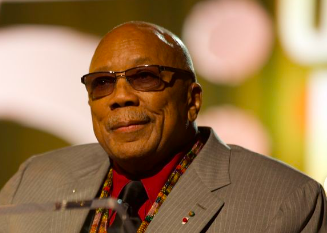
For decades, Quincy Jones built one of the most valuable portfolios in modern entertainment. Now his estate has sold a good portion of his music catalog containing many enduring hits.
The Songs That Were Sold
The family of the legendary producer has finalized a catalog acquisition deal with HarbourView Equity Partners that covers major portions of Jones’ recorded music, publishing, and ancillary media rights. At the center of the transaction is Jones’ stake in three of the most commercially successful albums in music history — Michael Jackson’s “Off the Wall,” “Thriller,” and “Bad” — records that have collectively sold more than 100 million copies worldwide.
But the deal extends far beyond those landmark releases. The agreement includes Jones’ recorded music and publishing rights tied to his own compositions, including the widely sampled instrumental “Soul Bossa Nova” and George Benson’s 1980 hit “Give Me the Night.” It also incorporates his participation in other intellectual property, including Jones’ stake in the sitcom “The Fresh Prince of Bel-Air,” where he served as executive producer.
“Our father didn’t just create hits, he built platforms that shaped culture across music, film, media, and technology,” said Quincy Jones III in a statement last week announcing the transaction.
For HarbourView, the catalog represents a portfolio with unusually diversified revenue streams. Jones’ songwriting stake in Kanye West’s “Good Life,” for example, stems from the sampling of Michael Jackson’s “P.Y.T.” — a track Jones co-wrote with James Ingram. Tupac Shakur’s “How Do U Want It” similarly generates royalties through its use of Jones’ 1974 song “Body Heat.”
The deal also includes theme music Jones composed for television series like “Ironside” and “Sanford and Son,” which continue to earn royalties through syndication and streaming.
“He’s an omnipresent force in creative spaces,” HarbourView CEO Sherrese Clarke told Rolling Stone. “We’ve got a number of iconic works in our portfolio, but adding someone like this to how we see our job as stewards and holders of canons of work for future generations, it felt like a blessing.”
The decision to sell reflects a broader financial trend in the music industry: treating catalogs as institutional assets rather than sentimental holdings. Royalty streams tied to publishing, streaming and licensing have made music rights attractive to private equity firms seeking stable long-term returns.
Even newer artists increasingly view catalog sales through that lens. T-Pain, who sold a portion of his publishing rights and select master recordings to HarbourView, said the economics were impossible to ignore.
“The amount of money that they gave me for my catalog … it literally would’ve taken me 100 years to make that money,” he said during an appearance on “Club Shay Shay.” “I calculated it, and I was like, ‘Why would I say no?’”
Artists from Jones’ generation have followed similar strategies. Patti LaBelle recently finalized a deal with Primary Wave to sell the income stream from her catalog royalties, covering a body of work that includes 18 studio albums and classics such as “If Only You Knew,” “On My Own,” “New Attitude,” and the No. 1 hit “Lady Marmalade.”
Catalog transactions can also help estates avoid the legal complications that sometimes arise after an artist’s death.
The estate of the Notorious B.I.G., for example, is currently entangled in litigation after music executive Wayne Barrow filed suit against Faith Evans over proceeds tied to a reported $100 million catalog deal with Primary Wave. Barrow alleges that distributions connected to the sale were improperly handled following the death of Biggie’s mother, Voletta Wallace, who had overseen the estate.
Such disputes illustrate why estates often move quickly to consolidate ownership structures around major intellectual property.
Jones, who died in November 2024 at age 91, spent more than seven decades building a catalog that spanned jazz, pop, film, and television. As his daughter Rashida Jones said in a statement, her father was “already building bridges and connecting the dots across music, film, television, publishing, technology and culture.”
Turning that legacy into a structured financial asset may ultimately prove to be one of the most strategic moves his estate could make.