Larry Bird made millions playing basketball, then built a second career making decisions for an NBA franchise. He won awards as a player, a coach and an executive. But his approach to money was clear long before he collected most of those honors: Bird knew what he had earned, and he saw no reason to apologize for it.
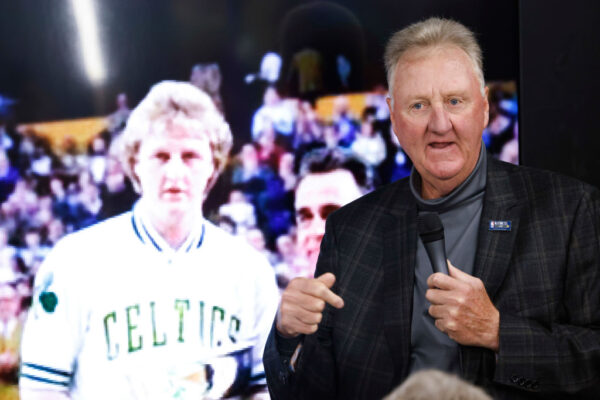
Back In The Day
That confidence was tested as soon as he reached Boston.
In 1979 the Celtics signed the Indiana State standout to a five-year, $3.25 million contract. The deal made him the NBA’s highest-paid rookie at the time.
That contract was signed some 16 years before the NBA collective bargaining agreement was changed to include the modern rookie salary scale. This agreement slots first-round draft picks into pre-determined contracts on a sliding scale from the first selection of the round to the last.
But long before the changes to rookie contracts than began in 1995, reports in 1979 put Bird’s annual salary at $700,000, raising the question of how quickly he could justify it, according to Basketball Network. Those reports were wrong but not too far off.
Boston was paying for more than a promising jump shot.
Bird, who grew up in French Lick, Indiana, led Indiana State to the 1979 NCAA championship game. The Sycamores lost to Michigan State, but Bird’s matchup with Magic Johnson captured national attention. It also gave fans an early look at a rivalry that would follow them into the NBA.
The Celtics had drafted Bird sixth overall in 1978, then waited for him to finish college. By the time he arrived, expectations had grown along with his price tag. Bird believed the deal reflected what he had already done.
“I feel that I’m in the right situation at the right time out of college,” he said, according to The New Yorker. “I done good in college.”
His first professional game offered reporters an opening to challenge that view. On Oct. 12, 1979, the Celtics beat the Houston Rockets, but Bird’s outside shot rarely found the mark. He finished with 14 points, 10 rebounds and five assists.
It was a productive debut, though hardly the scoring display some expected from the rookie commanding so much money, according to NBA.com.
“My outside shot, I felt, wasn’t there because I ain’t used to the rim,” Bird told reporters after the game. He was more interested in the result than his scoring total. “Always feel good when I’m playing basketball. Just couldn’t get it going tonight, but we won. That’s what it’s all about.”
When the conversation turned to his salary, Bird held his ground.
“I felt that every penny that I did get, I earned,” he said. Then he addressed the figure being repeated publicly: “The things that you read in the paper sometimes ain’t true. You know, sometimes you don’t get what they say in the paper.”
Bird had a point about the number. His contract’s annual average was $650,000, below the reported $700,000. Still, the scrutiny was real. Boston had made an unusually large commitment to a rookie, and every game gave observers another chance to judge the return.
The champion also respected precedent.
“Money has never really bothered me,” said Bird a few years after signing to the NBA. “You’ve still got to go out and produce. Just because I got the big contract, I’m not going to lie down and say, ‘O.K., guys, go to work.’ Something like this just makes me want to try harder than ever. . . . I hope I don’t change. I wasn’t poor before I signed this contract. Just because I got a few more dollars in my pocket doesn’t mean I’m better than anyone else.”
Bird’s earnings grew, but he did not rush to spend for show. Explaining why he balked at buying a luxury car, he once said, “I can’t see putting $50,000 or $60,000 into a car when our house growing up was worth $10,000.”
Early in his career, Bird recognized the intense public scrutiny surrounding his pioneer contract. He answered critics on the court, earning the 1980 Rookie of the Year award, three NBA championships, two Finals MVPs, three consecutive regular-season MVPs, and 12 All-Star selections.
Over 13 seasons in Boston, Bird settled every financial debate by leading the Celtics to three titles, ultimately becoming the league’s highest-paid player with a salary exceeding $7 million during his final 1991–92 campaign.
The investment made Boston the team everybody had to beat and a titan in the sport.


